Elena Labarta devotes her lecture to personalising luteal-phase support in frozen (FET) cycles and to what serum progesterone measured on transfer day can tell us.
The key observation: in about 30% of patients, progesterone on transfer day falls below the threshold — and their chances drop by 18–20%. This is a hidden but frequent cause of failure.
The working threshold the speaker cites is about 9 ng/mL (many centres use 10 ng/mL). Below this level the endometrium is insufficiently prepared.
Measurement technique matters too: blood for progesterone should be drawn about 6 hours after the last dose, otherwise the result misleads.
The rescue strategy for low progesterone is counter-intuitive: do not increase the vaginal dose, add another route of administration. Simply raising the vaginal form does not solve the absorption problem.
A separate finding is the microbiome link: a non-lactobacillary microbiome is associated with lower progesterone, connecting endometrial flora and hormonal readiness.
Labarta also turns to the natural cycle: in a true natural cycle one in three patients has an insufficient luteal phase — so the problem is not unique to artificial regimens.
The strategic vector of the talk is a move toward natural and modified-natural cycles, where the patient's own corpus luteum supports the luteal phase more physiologically.
The practical point: measure progesterone on transfer day rather than relying blindly on a "standard" dose — a simple, cheap way to flag at-risk patients in advance.
Individualisation here is not about more complex protocols but about timely monitoring and a targeted change of administration route where absorption falls short.
The mechanism behind the finding is simple: an artificial (HRT) cycle has no corpus luteum, and the progesterone level depends entirely on exogenous administration and individual absorption. Hence the spread: the same dose gives different serum levels in different patients.
This is exactly why a "blind" standard dose fails roughly one in three: without measurement there is no way to know whether a given patient falls into the low-level group, and clinically nothing shows until the transfer outcome itself.
The rescue logic of "add another route" rests on the same idea: if a patient's vaginal absorption is low, increasing the same form does not help, whereas adding subcutaneous or intramuscular progesterone raises the systemic level and rescues the cycle.
The upshot: transfer-day serum progesterone is an under-rated but informative marker; monitoring it and a sound rescue strategy can recover a share of "lost" implantations.
Luteal phase support based on serum progesterone monitoring: why standard vaginal therapy fails to reach the protective level in a subset of patients on the hormone replacement cycle, how to define the threshold value on transfer day, and when a change in the route of administration is indicated. Arguments for moving toward natural and modified natural FET cycles.
Measure serum progesterone on transfer day with attention to timing of the last dose.
Add a second route of administration when below threshold; do not simply increase vaginal dose.
Identify patients with higher BMI or vaginal dysbiosis at increased risk before transfer.
Use natural cycles when feasible to reduce medication exposure and pre-eclampsia risk.
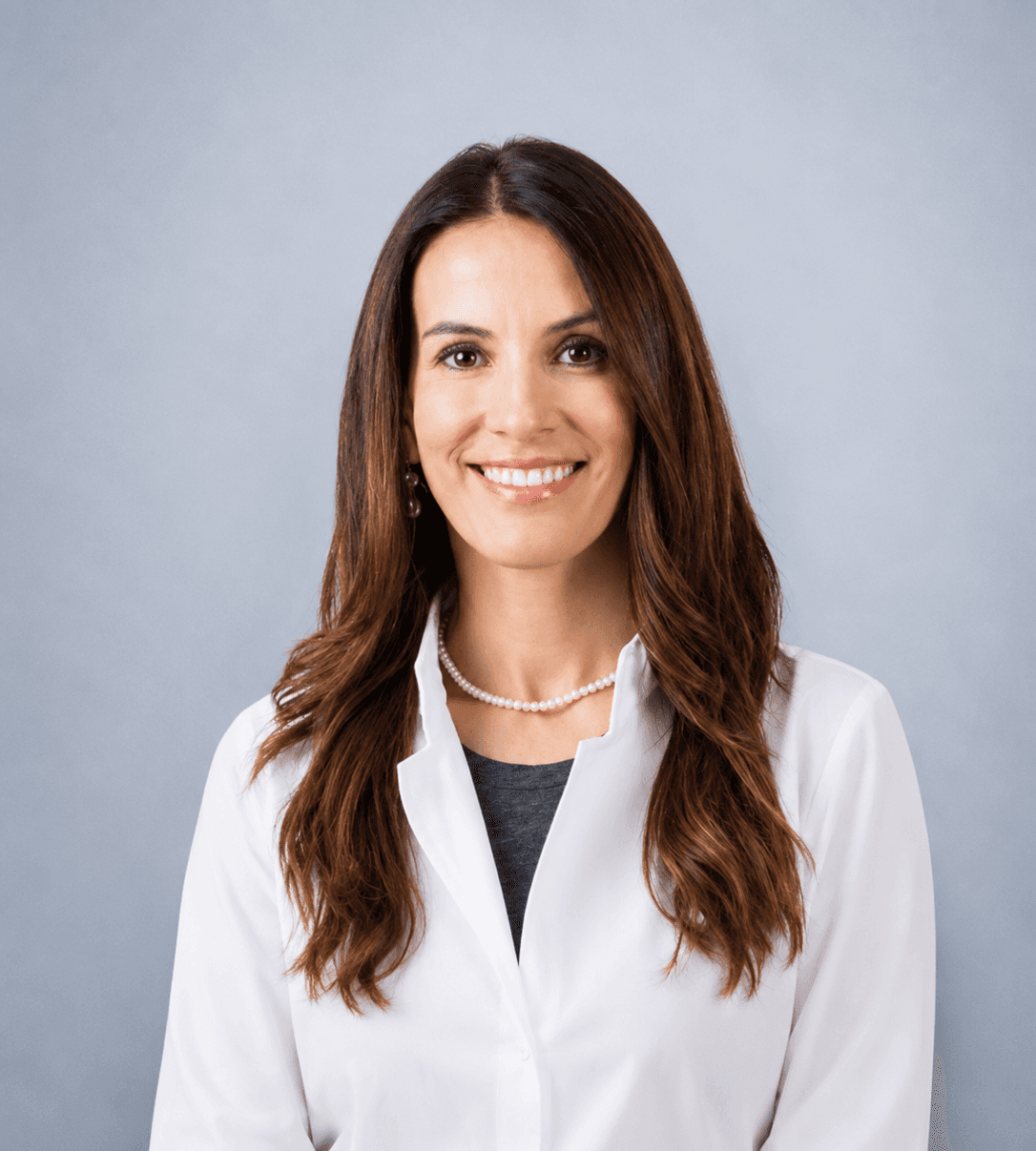
Gynecologist, reproductive surgeon and researcher at IVI RMA Valencia, specializing in human reproduction and assisted reproductive techniques since 2005. Her research focuses on serum progesterone in embryo transfer cycles and luteal phase management. Associate Professor of Master's programmes in assisted reproduction at the University of Valencia and author of more than 50 scientific papers.
Author of the lecture "Personalized luteal phase support"
Patients arrive at the clinic already having consulted ChatGPT, and regulators are reviewing the first AI ‘doctors’. What in artificial intelligence already works in reproductive medicine — from assistant avatars to embryo assessment and stimulation personalisation? A live discussion on three levels — strategy, service and clinic — with practical cases and a panel Q&A.


A Sona-Pharm grant award for specialists in infertility treatment. Applications open on 1 February 2027. Ceremony — July 2027, Stockholm, during the ESHRE meeting.

Targeted, biomarker-guided immunotropic therapy in reproductive medicine. A lecture by Kseniia Khazhylenko at the UARM Symposium 2026.
Audio: UASubtitles: UA32 min