E-learningNews & eventsSpeakersPartners
Sign in
Sign in
Social media
Main pages
  • News & events
  • Speakers
  • Partners
  • Reviews
E-learning
  • Courses
  • Lectures
Corporate website
  • Sona Group

Contacts

  • info@sona-pharm.eu
  • Business days 9:00-17:00 EET
  • +372 505 9699
  • Ahtri 6, Tallinn, 10151, Estonia

Sona Group unites a network of independent pharmaceutical and healthcare companies operating in research, manufacturing and continued medical education.

This website is intended for informational and corporate communication purposes only and is not a substitute for medical advice.

© 2026 Sona Academy®. All rights reserved.

··Site map
  • Privacy Policy
  • Terms of Use
  • Cookie Policy
  • Legal Notice
  • Professional Medical Disclaimer
  • Data Collection and Privacy Disclaimer
Reproductive healthMasterclass

Evolution of controlled stimulation protocols: selection factors and shifting paradigms

27 minAudio: UA
Start learning
About the lecture

Mykola Gryshchenko moves the conversation from "how to stimulate" to "why" — proposing to view controlled ovarian stimulation not as an isolated tool but as part of an overall ART strategy.

The starting frame is a holistic approach. The programme's goal has evolved: from pregnancy rate to cumulative live births, and today to the birth of a healthy child — as many as the family wants, in reasonable time, without complications and at optimal cost. The two most troublesome ART complications are ovarian hyperstimulation syndrome and multiple pregnancy.

Stimulation, in Gryshchenko's view, does not exist in a vacuum: the choice is shaped by available technologies — freezing, oocyte vitrification, PGT, personalised transfer. Hence its evolution — from high-dose protocols with high OHSS rates to more restrained, antagonist-based and personalised regimens.

A key efficiency landmark is the plateau from about 18-20 oocytes per cycle: below it, more oocytes mean more prospects, both current and cumulative. By reserve, patients fall into three cohorts — normo-, hyper- and hypo-responders, each with its main task (for hyper, avoid OHSS; for hypo, do not lose time).

For hypo-responders the POSEIDON stratification is especially useful, dividing "poor-prospect" patients by age (before and after 35) and by whether a weak response was anticipated or met only during the cycle.

A separate thread is pharmacogenomics in real-world stimulation. Gryshchenko cites a 2025 study: genotyping the FSH receptor (FSHR N680S) and matching the drug to the receptor variant changes the live-birth rate — 40% with a personalised approach versus 29% without.

Protocol choice is shaped by many factors beyond the patient's profile: comorbidity (endometriosis, adenomyosis, oncological causes), the need for social fertility preservation, cultural and religious limits, the acceptability of donation and embryo storage, and the systemic resources of clinic and state.

The speaker examines two clinical scenarios. Under limited resources (the NHSU situation) the priority is cost optimisation, fresh transfer, mild stimulation; under sufficient resources — optimising time to result, accumulation and frozen transfer, the "one and done" strategy.

The ethics of "surplus" embryos is raised too: citing the Lawrence and Ata statement paper, Gryshchenko suggests freezing oocytes more often instead of mass embryo creation — more flexible for the family and easing some ethical dilemmas, but requiring reliable oocyte vitrification in the lab.

Also highlighted are ART accessibility as a global trend (the Walking Egg project — a mobile IVF lab for resource-limited countries) and the role of AI, which already surpasses standard clinical practice in some tasks thanks to objectivity and handling many criteria at once. Meanwhile no adjuvant therapy holds an ESHRE/ASRM evidence level.

The closing call is to think not with the ideology of a single cycle but with a family-building strategy: from assessing the couple's profile and prior stimulations, through the choice of tactics and transfer type, to execution and control, where AI dashboards help. Success is a family of the desired size, the woman's preserved health and the absence of ethical dilemmas over remaining embryos.

Topics covered
  • Stimulation personalisation
  • Freeze-all
  • Cycle segmentation
  • Protocol selection factors
  • Ovarian response
  • Stimulation safety
About the course

The stimulation paradigm has shifted from 'more oocytes at any cost' to personalisation and safety. Which factors really drive protocol choice today, how freeze-all and cycle segmentation changed decision logic, and where the limits of reasonable individualisation lie.

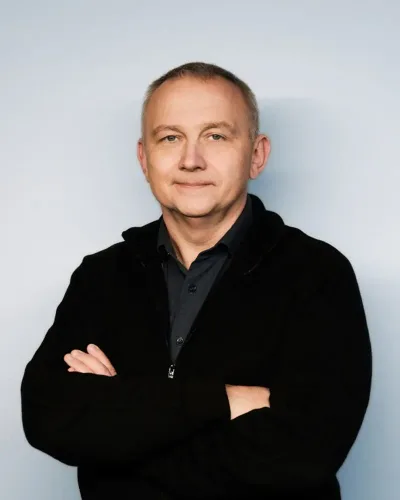
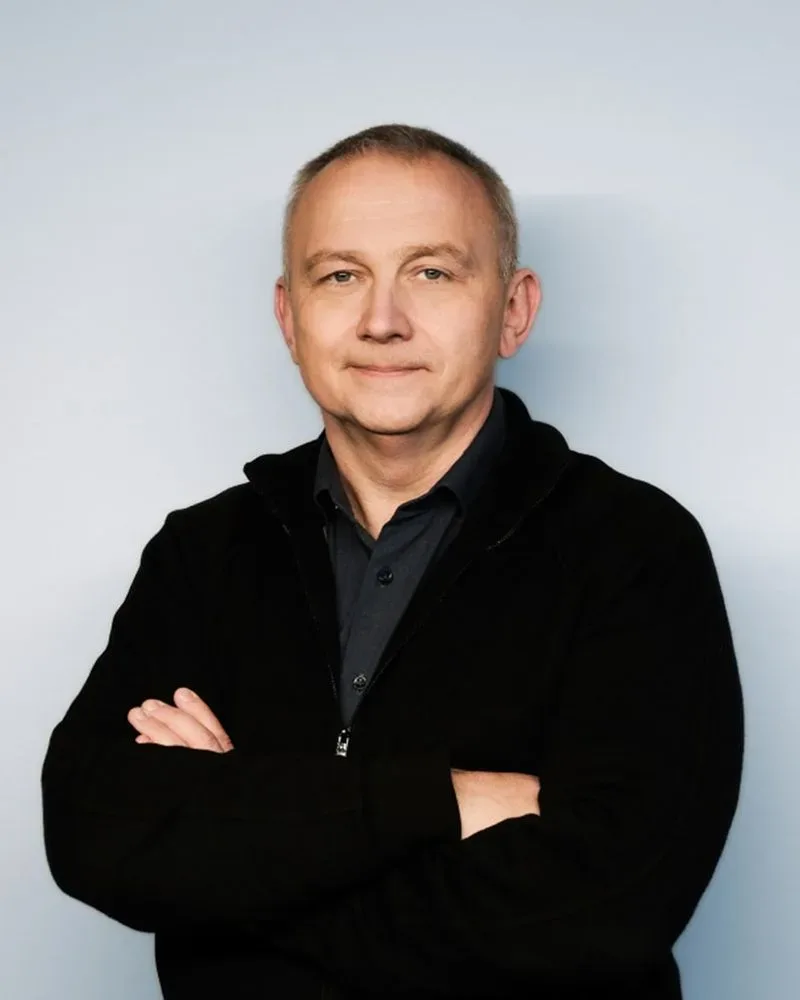
Mykola Gryshchenko

Mykola Gryshchenko

Professor, MD, PhD, and Head of Sona Academy at Sona Group; an expert in reproductive medicine focusing on medical education and scientific strategy. He initiates and leads the group's educational and scientific programmes, including the Winter School of Reproductology and satellite scientific events.

Author of the lecture "Evolution of controlled stimulation protocols: selection factors and shifting paradigms"

Continue your learning

View all programs
View all programs
Sona Academy Online Webinar
Webinar • AI in Reproductive Medicine
30d 18hReproductive healthLecture

AI in Reproductive Medicine

Patients arrive at the clinic already having consulted ChatGPT, and regulators are reviewing the first AI ‘doctors’. What in artificial intelligence already works in reproductive medicine — from assistant avatars to embryo assessment and stimulation personalisation? A live discussion on three levels — strategy, service and clinic — with practical cases and a panel Q&A.

Joaquim PintóChristos Venetis
Joaquim Pintó & Christos Venetis
Sona-Pharm grant award • Ceremony — July 2027, Stockholm
Fertility Award 2027 • Applications open 1 Feb 2027
266d 11hReproductive healthLecture

Fertility Award 2027

A Sona-Pharm grant award for specialists in infertility treatment. Applications open on 1 February 2027. Ceremony — July 2027, Stockholm, during the ESHRE meeting.

Mykola Gryshchenko
Mykola Gryshchenko
UARM Symposium • 22.05.2026
Lecture • Immunotropic therapy in reproductive medicine
Reproductive healthLecture

Immunotropic therapy in reproductive medicine

Targeted, biomarker-guided immunotropic therapy in reproductive medicine. A lecture by Kseniia Khazhylenko at the UARM Symposium 2026.

Audio: UASubtitles: UA32 min

Kseniia Khazhylenko
Kseniia Khazhylenko