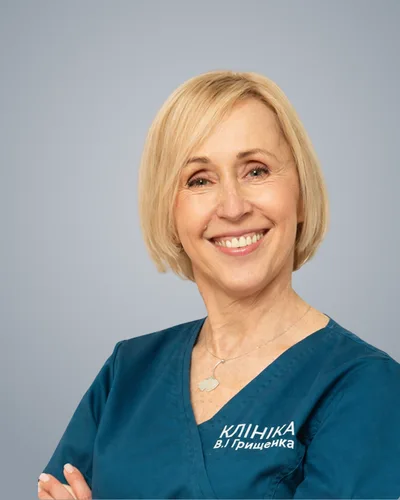
Mykola Gryshchenko devotes his lecture to artificial intelligence, femtech and automation in reproduction — focusing on the endometrium and on where these technologies already bring benefit and where not yet.
He begins with definition and landscape: what we actually call AI in medicine, which of its types apply in the ART clinic and how they differ from ordinary automation.
The key question is why an ART clinic needs AI. Gryshchenko's answer: the number of criteria to weigh in a decision is rising fast, and a human physically cannot hold them all in mind at once.
AI is valuable precisely because it is objective, does not tire and can handle many parameters at once — where human assessment is variable and prone to fatigue.
The speaker goes through the cycle stages where AI already contributes: embryo selection, endometrial assessment, prediction of stimulation response, decision support on the protocol.
A special emphasis is the endometrium: assessing receptivity and readiness for transfer is the area where objective, reproducible metrics are especially needed and where ultrasound subjectivity is high.
Gryshchenko's principled stance: AI is support for the clinician, not a replacement. The tool removes routine and increases objectivity, but the clinical decision and responsibility remain with the human.
Femtech and automation are treated as a parallel trend: from wearables and apps to automation of laboratory processes, changing how data are collected and processed.
The combination of AI and microfluidics is discussed separately — a direction where algorithmic selection meets the engineering precision of manipulation, potentially reinforcing each other.

Gryshchenko soberly outlines the limits: AI quality depends on data quality, models may inherit sampling biases, and the "black box" complicates clinical interpretation.
The ethical frame is no less important: questions of responsibility, algorithm transparency and patient consent must be resolved alongside adoption, not after the fact.
The speaker's closing formula — "the time of AI has come, but this is not yet its best moment": the technology is already useful but at an early stage of maturity, and overrating it is dangerous.
The practical sense for the clinic is to adopt AI where it brings measurable benefit (objectivising assessment, decision support), without making it an end in itself or letting it replace clinical thinking.
This balanced approach echoes the school's overall idea: technology serves personalisation but does not abolish the clinician and physiology, which remain central.
The upshot: AI, femtech and automation are a real and growing toolkit of reproductive medicine, especially in endometrial assessment and embryo selection; their value lies in supporting the clinician while honestly accounting for limits and ethics.
From at-home hormonal screening and ultrasound classifiers to CD138 detection in chronic endometritis and endometrium-on-chip — a tour of where artificial intelligence already adds value across the IVF cycle, and where its real limits sit today.
Professor, MD, PhD, and Head of Sona Academy at Sona Group; an expert in reproductive medicine focusing on medical education and scientific strategy. He initiates and leads the group's educational and scientific programmes, including the Winter School of Reproductology and satellite scientific events.
Author of the lecture "Artificial intelligence, femtech and automation in IVF"