Course content
1
Opening
A short welcoming opening to the 2026 London edition of the Summer School of Reproductologist. A framing of the day's three blocks — LH biology and genetics, protocol optimisation and recombinant LH, POSEIDON and APHRODITE — and a brief acknowledgement of the international faculty assembled in Bloomsbury.
4:20
2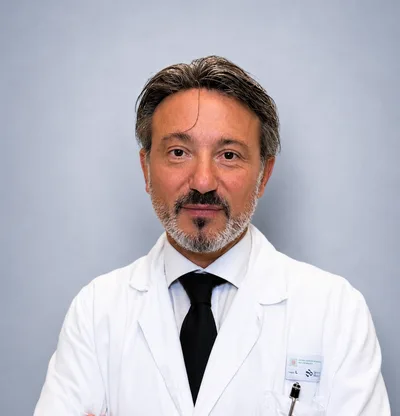 Antonio La Marca
The role of LH in early folliculogenesis: lessons from hypogonadotropic hypogonadism and polycystic ovarian morphology
What can two extreme clinical scenarios — hypogonadotropic hypogonadism and polycystic ovarian morphology — teach us about LH in early folliculogenesis? Reading the boundary cases is often how the central mechanism becomes visible.
33:43
3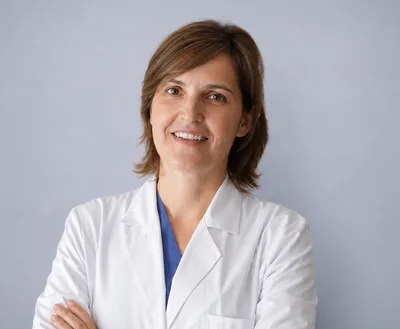 Belén Lledó
Genetics of the ovarian response
Why do two patients with the same age, AMH and antral count respond differently to the same stimulation? A look at the genetic markers — FSHR, LHCGR, ESR polymorphisms — that increasingly drive personalised protocol design.
33:43
4Antonio La Marca & Belén Lledó
Block 1 Q&A: LH biology and genetics of ovarian response
Open-floor Q&A after the first two lectures. Live exchange on how LH biology and receptor genetics translate into day-to-day protocol decisions — and where the limits of personalisation sit in real practice.
28:56
5 Marcos Meseguer Escrivá
From oocytes to euploid embryos: does recombinant LH make a difference?
More oocytes is not the same as more euploid embryos. A focused look at whether adding recombinant LH to FSH shifts not only the yield, but the proportion of euploid blastocysts — drawing on Meseguer's own data.
28:56
6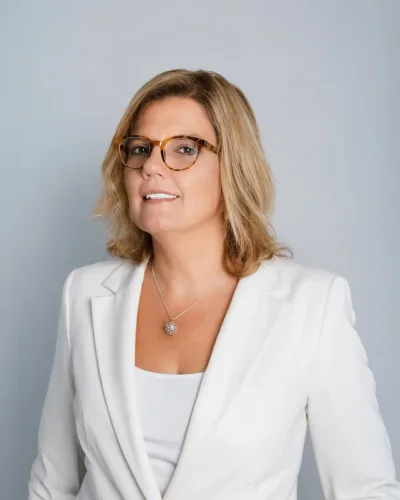 Biljana Popović-Todorović
Does optimizing treatment protocols from the start prevent hypo-response in ART cycles?
Hypo-response often gets blamed on the patient — but maybe the protocol picked the fight on the wrong day. Can up-front optimisation of stimulation, LH supplementation and trigger choice prevent a hypo-response cycle from the very first day?
24:37
7 Biljana Popović-Todorović & Marcos Meseguer Escrivá & Mykola Gryshchenko
Block 2 Q&A: protocol optimisation and recombinant LH
Open-floor Q&A after the second block. Live discussion on individualising stimulation from cycle day one, mid-stimulation rescue decisions, and where rLH and HMG actually deliver different outcomes.
24:37
8 Peter Humaidan
POSEIDON criteria revisited
POSEIDON groups 1-4 reshaped how we think about poor ovarian response. Almost a decade on, what has the framework gained, where has it been pressure-tested by clinical reality, and how does it map to live-birth outcomes today?
42:02
9 Sandro Esteves
Modern approaches to male infertility under the APHRODITE criteria lens
Behind every semen analysis lies a testicle, and behind every testicle lies endocrine regulation. APHRODITE — published in Reproductive Biomedicine Online 2024 — stratifies male infertility into five endocrine phenotypes and asks who actually benefits from gonadotropin therapy, and who does not.
42:02
10Peter Humaidan & Sandro Esteves
Block 3 Q&A: POSEIDON and APHRODITE in practice
Open-floor Q&A after the final block. Live exchange on POSEIDON in everyday practice, APHRODITE-led decisions in male partners, and where the two frameworks meet at the couple level.
26:08
11
Closing
Closing remarks to the 2026 London Summer School — a short synthesis of the day's themes, the connecting thread of LH precision and a brief look at what the recordings will bring on the Sona Academy platform.
8:25



-1.png&w=3840&q=75)