E-learningNews & eventsSpeakersPartners
Sign in
Sign in
Social media
Main pages
  • News & events
  • Speakers
  • Partners
  • Reviews
E-learning
  • Courses
  • Lectures
Corporate website
  • Sona Group

Contacts

  • info@sona-pharm.eu
  • Business days 9:00-17:00 EET
  • +372 505 9699
  • Ahtri 6, Tallinn, 10151, Estonia

Sona Group unites a network of independent pharmaceutical and healthcare companies operating in research, manufacturing and continued medical education.

This website is intended for informational and corporate communication purposes only and is not a substitute for medical advice.

© 2026 Sona Academy®. All rights reserved.

··Site map
  • Privacy Policy
  • Terms of Use
  • Cookie Policy
  • Legal Notice
  • Professional Medical Disclaimer
  • Data Collection and Privacy Disclaimer
Reproductive healthLecture

LH deficiency during COS

34 minAudio: UA · RUSubtitles: UA · RU
Player.aboutHeading

The lecture by Robert Fischer answers why a relative deficiency of luteinizing hormone develops in a subset of patients during controlled ovarian stimulation, and in which clinical situations it is worth restoring it with recombinant LH. He frames LH deficiency not as a rare exception but as a predictable consequence of modern pituitary-suppression protocols.

The starting point is the two-cell, two-gonadotropin model of folliculogenesis. LH acts on theca cells to drive androgen synthesis, and these androgens are aromatized into estrogens in granulosa cells under the influence of FSH. Without sufficient LH activity this substrate pathway weakens, and follicular maturation suffers even when the FSH dose is adequate.

Against the background of pituitary desensitization with GnRH agonists and antagonists, endogenous LH in some patients falls below the threshold required for full steroidogenesis. This iatrogenic deficiency matters most in women with intrinsically low LH activity, in older patients, and when the response to FSH-only stimulation is suboptimal or slow.

Fischer builds the rationale for adding LH around a 2017 meta-analysis that pooled data on the combined use of FSH and recombinant LH. Without citing individual numerical results, he lays out the logic of the evidence: in defined subgroups, restoring LH is associated with a more favorable cycle course and helps correct an inadequate response.

He also examines the choice of endpoint used to judge the benefit of the intervention. The number of retrieved oocytes is treated as a practical and reproducible marker of the stimulation outcome, although the author stresses the need to weigh it against oocyte maturity, embryo quality and, ultimately, the pregnancy rate.

The practical section addresses the clinical scenarios in which adding recombinant LH is most justified: hypogonadotropic states, patients of advanced reproductive age, an unexpectedly weak response in a previous cycle, and signs of slow follicular growth on monitoring. Fischer offers reference points for the decision rather than a rigid universal algorithm.


The take-home message for the clinic is that assessing LH status should become part of protocol planning rather than a belated reaction to failure. Timely identification of patients with relative LH deficiency and personalized addition of recombinant LH help improve cycle efficiency in those for whom standard FSH monotherapy does not deliver a sufficient result. In this way, adding LH becomes a deliberate clinical decision matched to the individual patient's phenotype rather than a routine step.

Topics covered
  • LH deficiency in COS
  • Recombinant LH
  • Two-cell model
  • 2017 meta-analysis
  • Oocyte yield
Start learning
About the course

When FSH alone is not enough: recognizing LH deficiency in stimulation and adding recombinant LH in time.

What you will learn

Understand the LH-deficiency mechanism

The viewer will be able to explain how pituitary suppression in stimulation protocols leads to relative LH deficiency and impairs follicular steroidogenesis.

Apply the two-cell model

The viewer will be able to use the two-cell, two-gonadotropin model to justify the role of LH in androgen synthesis and subsequent aromatization to estrogens.

Identify candidate patients

The viewer will learn to recognize the clinical scenarios in which adding recombinant LH is most justified, including advanced age and poor response.

Interpret the stimulation outcome

The viewer will be able to interpret oocyte yield correctly as an outcome marker, weighing it against oocyte maturity and embryo quality.

Who is this course for
  • Reproductive endocrinologists
  • ART clinicians
  • Gynecologists
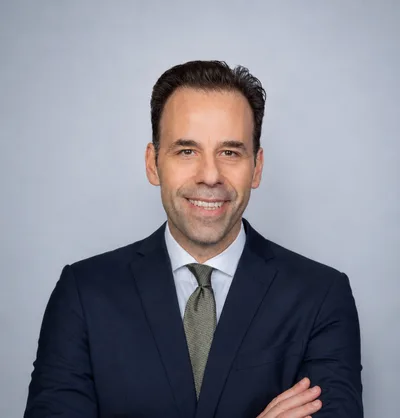
Robert Fischer

Robert Fischer

MD, reproductive endocrinologist. Founder and Medical Director of Fertility Center Hamburg (FCH), Germany. Focus on controlled ovarian stimulation and the management of poor-prognosis patients.

Author of the lecture "LH deficiency during COS"

Continue your learning

View all programs
View all programs
Sona-Pharm grant award • Ceremony — July 2027, Stockholm

Fertility Award 2027 • Applications open 1 Feb 2027

295d 17hReproductive healthLecture

Fertility Award 2027

A Sona-Pharm grant award for specialists in infertility treatment. Applications open on 1 February 2027. Ceremony — July 2027, Stockholm, during the ESHRE meeting.

Mykola Gryshchenko
Mykola Gryshchenko
UARM Symposium • 22.05.2026

Lecture • Immunotropic therapy in reproductive medicine

Reproductive healthLecture

Immunotropic therapy in reproductive medicine

Targeted, biomarker-guided immunotropic therapy in reproductive medicine. A lecture by Kseniia Khazhylenko at the UARM Symposium 2026.

Audio: UASubtitles: UA32 min

Kseniia Khazhylenko
Kseniia Khazhylenko
UARM 2026 Precongress Course

Masterclass • Ovarian stimulation and endometrial preparation

Reproductive healthMasterclass

Secrets of ovarian stimulation and endometrial preparation in ART

A practical UARM 2026 masterclass on controlled ovarian stimulation, complication prevention and endometrial preparation for frozen embryo transfer. Six lectures and two discussions from leading Ukrainian reproductologists.

Audio: UA3h 18m

Halyna StrelkoNataliia Vladykina+3
Halyna Strelko & 4 others