E-learningNews & eventsSpeakersPartners
Sign in
Sign in
Social media
Main pages
  • News & events
  • Speakers
  • Partners
  • Reviews
E-learning
  • Courses
  • Lectures
Corporate website
  • Sona Group

Contacts

  • info@sona-pharm.eu
  • Business days 9:00-17:00 EET
  • +372 505 9699
  • Ahtri 6, Tallinn, 10151, Estonia

Sona Group unites a network of independent pharmaceutical and healthcare companies operating in research, manufacturing and continued medical education.

This website is intended for informational and corporate communication purposes only and is not a substitute for medical advice.

© 2026 Sona Academy®. All rights reserved.

··Site map
  • Privacy Policy
  • Terms of Use
  • Cookie Policy
  • Legal Notice
  • Professional Medical Disclaimer
  • Data Collection and Privacy Disclaimer
Reproductive healthLecture

From basic ovarian physiology to ovarian stimulation

25 minAudio: UA · RUSubtitles: UA · RU
Player.aboutHeading

The lecture by Human M. Fatemi addresses why, in clinical practice, a patient's age is far from a reliable predictor of how her ovaries will respond to stimulation, and what the reproductive specialist should assess beyond the date of birth. Building on the basic physiology of folliculogenesis, the speaker bridges the fundamental mechanisms of ovarian function and the rational choice of a controlled ovarian stimulation protocol.

The account rests on the premise that ovarian response is shaped by a combination of factors rather than by chronological age alone. The primordial follicle pool, the sensitivity of granulosa cells to gonadotropins, the state of the FSH and LH receptor apparatus, and the underlying endocrine and metabolic setting jointly determine how many antral follicles can be recruited and carried through to a mature oocyte.

From this follows the central clinical paradox that occupies much of the lecture: a young woman may turn out to be a poor responder, while an older patient may retain an unexpectedly high reserve. The chronological and biological age of the ovary diverge, and relying on year of birth alone leads either to an insufficient or to an excessive gonadotropin dose and a higher risk of complications.

To avoid this error, the speaker argues for a multifactorial approach to ovarian reserve assessment. This means interpreting anti-Mullerian hormone and antral follicle count together as complementary markers, framed by clinical context — the history of previous cycles, prior gynecological interventions, body mass index, and comorbidities. No single parameter is a sufficient basis for a decision on its own.

At the physiological level, the lecture recalls the two-cell, two-gonadotropin model of steroidogenesis, in which LH drives androgen production in theca cells while FSH ensures their aromatization to estrogens in granulosa cells. Understanding this mechanism explains why, in a subset of patients, adequate follicular growth requires not only FSH but also sufficient LH activity, and it sets the basis for differentiated prescribing.


The practical conclusion Fatemi arrives at is to abandon the one-size-fits-all protocol in favor of a personalized stimulation strategy. A correct baseline assessment of reserve, a realistic prediction of the oocyte yield, and a starting dose matched to the individual patient phenotype improve the efficiency of the cycle and reduce the likelihood of both poor response and hyperstimulation.

The lecture opens the morning session of the Summer School of Reproductologist 2023 and serves as the physiological foundation for the talks that follow on receptor pharmacogenomics, LH deficiency, and the management of poor-prognosis patients. It is addressed to reproductive specialists who seek to build a stimulation protocol on an understanding of mechanisms rather than on fixed templates.

Topics covered
  • Ovarian physiology
  • Ovarian reserve
  • AMH and antral follicle count
  • Poor ovarian response
  • Personalized stimulation
Start learning
About the course

Why age fails to predict ovarian response — and how to assess reserve so that stimulation becomes truly personalized.

What you will learn

Assess reserve multifactorially

The viewer will learn to interpret AMH, antral follicle count, and clinical context together instead of relying on a single marker or on age.

Recognize age-reserve mismatch

The viewer will understand why a young patient can be a poor responder while an older woman may retain a high ovarian reserve.

Apply the two-cell model to drug choice

The viewer will be able to link the roles of FSH and LH in steroidogenesis to the rationale for differentiated gonadotropin prescribing.

Plan a personalized protocol

The viewer will learn to match the starting dose and stimulation strategy to the patient phenotype, reducing the risk of poor response and hyperstimulation.

Who is this course for
  • Reproductive specialists
  • Gynecologist-endocrinologists
  • ART physicians
  • Trainees in reproductive medicine
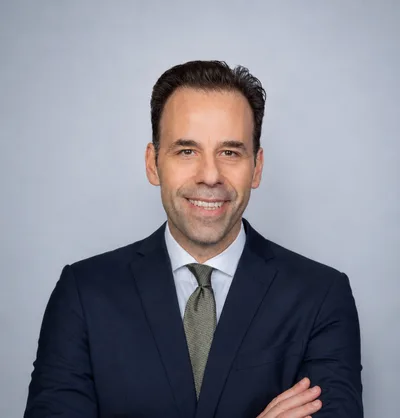
Human M. Fatemi

Human M. Fatemi

Group Medical Director of ART Fertility Clinics (UAE, Oman and India) and Clinical Professor at the Vrije Universiteit Brussel. A subspecialist in reproductive medicine and surgery, internationally recognized for his work on ovarian stimulation and luteal phase endocrinology. Author of more than 200 peer-reviewed publications.

Author of the lecture "From basic ovarian physiology to ovarian stimulation"

Continue your learning

View all programs
View all programs
Sona-Pharm grant award • Ceremony — July 2027, Stockholm

Fertility Award 2027 • Applications open 1 Feb 2027

295d 17hReproductive healthLecture

Fertility Award 2027

A Sona-Pharm grant award for specialists in infertility treatment. Applications open on 1 February 2027. Ceremony — July 2027, Stockholm, during the ESHRE meeting.

Mykola Gryshchenko
Mykola Gryshchenko
UARM Symposium • 22.05.2026

Lecture • Immunotropic therapy in reproductive medicine

Reproductive healthLecture

Immunotropic therapy in reproductive medicine

Targeted, biomarker-guided immunotropic therapy in reproductive medicine. A lecture by Kseniia Khazhylenko at the UARM Symposium 2026.

Audio: UASubtitles: UA32 min

Kseniia Khazhylenko
Kseniia Khazhylenko
UARM 2026 Precongress Course

Masterclass • Ovarian stimulation and endometrial preparation

Reproductive healthMasterclass

Secrets of ovarian stimulation and endometrial preparation in ART

A practical UARM 2026 masterclass on controlled ovarian stimulation, complication prevention and endometrial preparation for frozen embryo transfer. Six lectures and two discussions from leading Ukrainian reproductologists.

Audio: UA3h 18m

Halyna StrelkoNataliia Vladykina+3
Halyna Strelko & 4 others