E-learningNews & eventsSpeakersPartners
Sign in
Sign in
Social media
Main pages
  • News & events
  • Speakers
  • Partners
  • Reviews
E-learning
  • Courses
  • Lectures
Corporate website
  • Sona Group

Contacts

  • info@sona-pharm.eu
  • Business days 9:00-17:00 EET
  • +372 505 9699
  • Ahtri 6, Tallinn, 10151, Estonia

Sona Group unites a network of independent pharmaceutical and healthcare companies operating in research, manufacturing and continued medical education.

This website is intended for informational and corporate communication purposes only and is not a substitute for medical advice.

© 2026 Sona Academy®. All rights reserved.

··Site map
  • Privacy Policy
  • Terms of Use
  • Cookie Policy
  • Legal Notice
  • Professional Medical Disclaimer
  • Data Collection and Privacy Disclaimer
Reproductive healthLecture

Protocols and Decisions: Trigger Selection and Oocyte Quality

50 minAudio: UASubtitles: EN · UA · RU
Player.aboutHeading

What was shown

The trigger is one small injection at the end of stimulation — and most of the cycle outcome rides on it. The talk walks through HCG, GnRH agonist, dual and double trigger strategies, the Vienna consensus 80-95% oocyte yield target, and the practical decisions that connect trigger choice to oocyte maturation in real protocols.

Key findings

HCG remains the workhorse trigger but extends LH-like activity over 6-7 days, driving the progesterone surge in fresh cycles. Agonist trigger gives a much shorter LH peak (24-28 hours) and a steep luteal-phase drop — needs rescue if transferring fresh. Dual trigger (agonist + HCG) recovers oocyte maturation in cases with low yield-per-follicle ratio. The Vienna consensus oocyte-yield target of 80-95% of antral follicles is a usable lab quality marker.

What this means in practice

Match trigger choice to the cycle plan: HCG for fresh transfer with full luteal-phase support; agonist trigger for freeze-all and OHSS risk; dual trigger when prior cycle showed a low yield-to-follicle ratio. Audit your lab against the 80-95% Vienna target and identify whether deviations come from stimulation, trigger timing or aspiration technique.

Caveats

Empty follicle syndrome can present even with a correctly administered trigger — check LH stick or progesterone in suspicious cases. Trigger timing affects maturation more than dose at modern doses. HMG-derived LH activity does not match recombinant LH or HCG one-to-one.

The trigger of final maturation mimics the natural LH peak. The classic option is hCG: prolonged action due to its similarity to LH, but with a risk of OHSS. The GnRH-agonist trigger induces an endogenous surge of LH and FSH, sharply lowers the OHSS risk and works well in antagonist protocols with a freeze-all strategy.

The dual trigger (GnRH agonist + low-dose hCG) combines the advantages: a physiological surge and luteal-phase support. The double trigger — administering two stimuli at an interval (for example, 40 and 34 hours before retrieval) — is used when the oocyte immaturity index is high, to synchronize final maturation.

The Vienna consensus sets a target benchmark of efficiency: the proportion of mature oocytes (yield) should be around 80–95% of the number of follicles ≥12–14 mm. A downward deviation is a signal to reconsider the timing, dose and type of trigger.

Timing is critical: the trigger is given when there is a sufficient number of leading follicles, and retrieval after a strictly calibrated interval matching the kinetics of meiosis resumption and cumulus expansion. An error in timing directly reduces the proportion of mature MII oocytes.

Empty follicle syndrome — the absence of oocytes when aspirating visually mature follicles — is more often related to pharmacokinetics or a trigger administration error than to true pathology. The analysis of its causes closes the logic of the lecture: the right trigger at the right time is the key to oocyte quality.

Topics covered
  • HCG trigger
  • GnRH agonist trigger
  • Dual trigger
  • Double trigger
  • Vienna consensus 80-95% oocyte yield
  • Oocyte maturation mechanisms
  • Trigger timing
  • Empty follicle syndrome
Start learning
About the course

The trigger is one small injection at the end of stimulation — and most of the cycle outcome rides on it. A practical walk through trigger choice (HCG, agonist, dual, double), the Vienna consensus 80-95% oocyte yield ratio, and what each trigger does to oocyte maturation in real protocols.

Halyna Strelko

Halyna Strelko

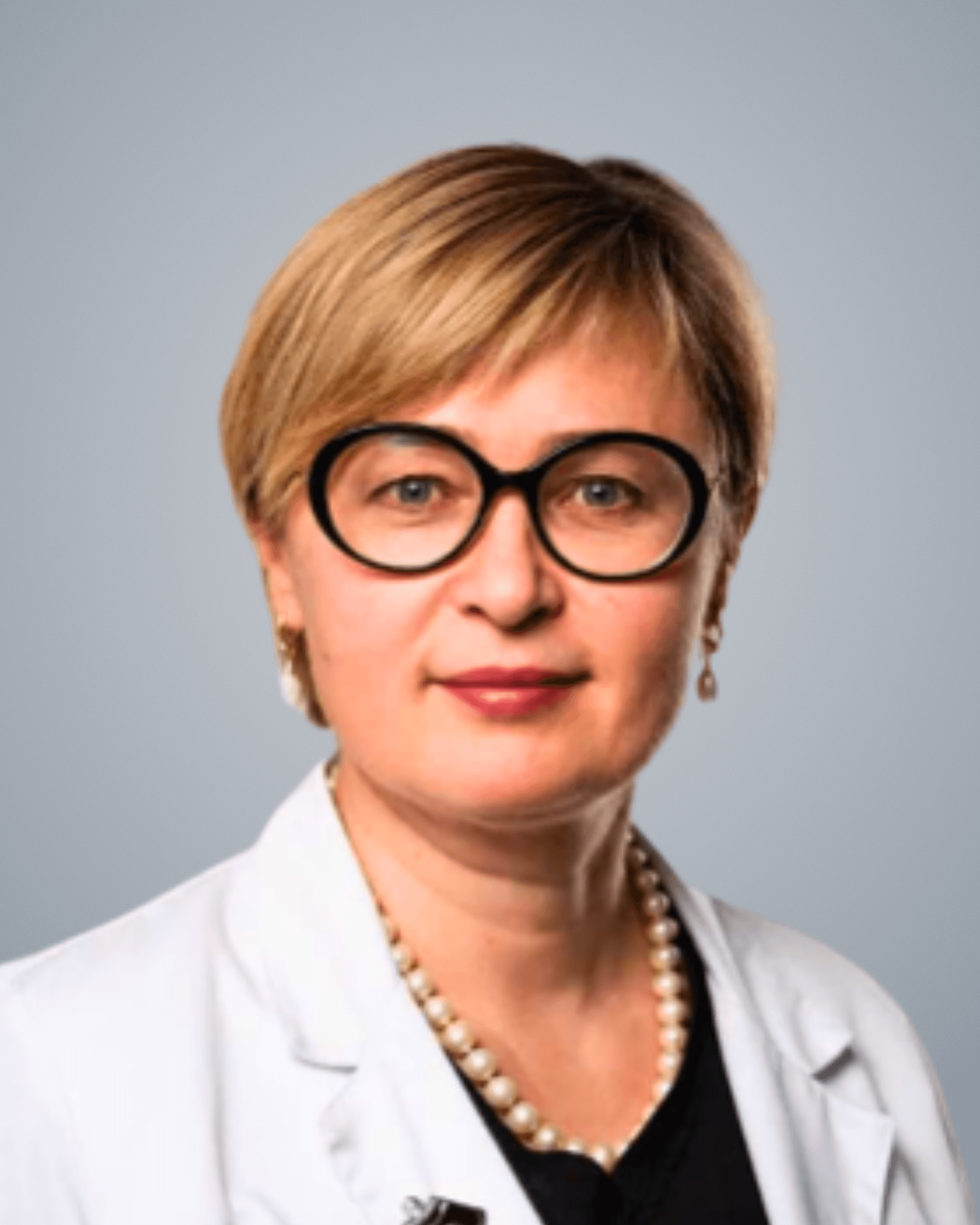
Professor and Doctor of Medical Sciences, Medical Director and co-founder of the IVMED clinic in Kyiv and a specialist in reproductive medicine.

Author of the lecture "Protocols and Decisions: Trigger Selection and Oocyte Quality"

Continue your learning

View all programs
View all programs
Sona Academy Online Webinar
Webinar • AI in Reproductive Medicine
44d 5hReproductive healthLecture

AI in Reproductive Medicine

Patients arrive at the clinic already having consulted ChatGPT, and regulators are reviewing the first AI ‘doctors’. What in artificial intelligence already works in reproductive medicine — from assistant avatars to embryo assessment and stimulation personalisation? A live discussion on three levels — strategy, service and clinic — with practical cases and a panel Q&A.

Christos Venetis
Christos Venetis
Sona-Pharm grant award • Ceremony — July 2027, Stockholm
Fertility Award 2027 • Applications open 1 Feb 2027
279d 22hReproductive healthLecture

Fertility Award 2027

A Sona-Pharm grant award for specialists in infertility treatment. Applications open on 1 February 2027. Ceremony — July 2027, Stockholm, during the ESHRE meeting.

Mykola Gryshchenko
Mykola Gryshchenko
UARM Symposium • 22.05.2026
Lecture • Immunotropic therapy in reproductive medicine
Reproductive healthLecture

Immunotropic therapy in reproductive medicine

Targeted, biomarker-guided immunotropic therapy in reproductive medicine. A lecture by Kseniia Khazhylenko at the UARM Symposium 2026.

Audio: UASubtitles: UA32 min

Kseniia Khazhylenko
Kseniia Khazhylenko